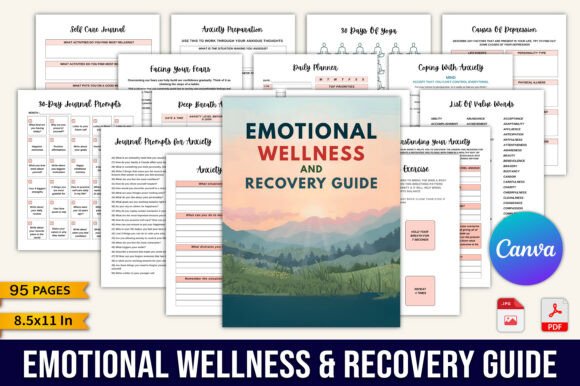
Emotional Wellness Recovery Guide
Life doesn’t pause for stress, burnout, or quiet inner chaos—but your healing doesn’t need to wait either. The Emotional Wellness Recovery Guide isn’t another self-help trend. It’s a grounded, compassionate, and deeply practical mental-health support planner built for real days: the ones where anxiety hums beneath meetings, exhaustion masks as productivity, and “I’m fine” feels like the only sentence you can safely speak.
What Is This Guide—Really?
At its core, the Emotional Wellness Recovery Guide is an all-in-one workbook designed not to fix you—but to meet you where you are. It assumes you’re already doing your best. It offers structure without rigidity, insight without judgment, and gentle accountability without shame. Think of it less as a textbook and more like a trusted companion who shows up with pen-and-paper tools, breathing anchors, and reflective prompts—ready when you are.
Unlike apps that ping and scroll, or generic journals that ask “How was your day?” without context, this guide meets emotional complexity with intention. It helps you map patterns—not just moods, but how sleep, hydration, boundaries, spending, and even dream fragments connect to your inner weather.
Why Structure Matters (Especially When You Feel Unmoored)
When overwhelm takes over, decision fatigue spikes. Choosing what to eat, when to rest, or even whether to reply to a text can feel exhausting. That’s where intentional scaffolding becomes healing. The Emotional Wellness Recovery Guide provides that scaffolding—not as a rigid system, but as a customizable toolkit:
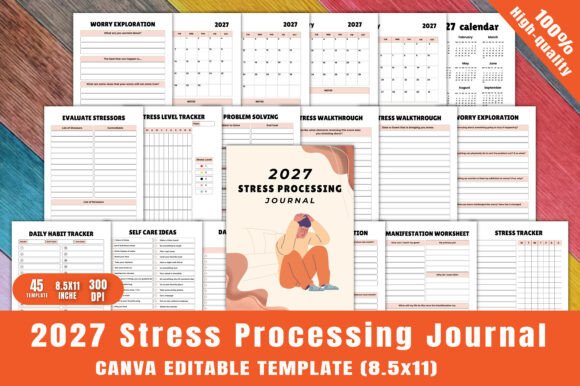
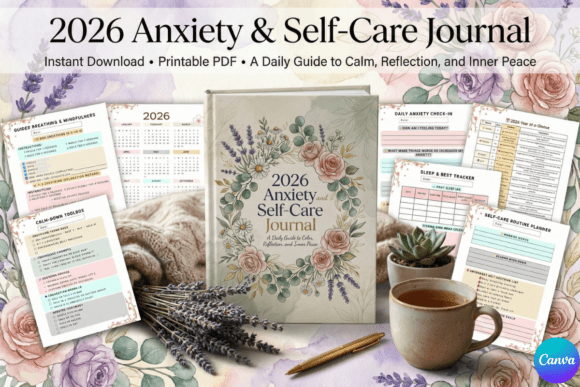
- My Reaction and Understanding Your Anxiety pages help name what’s happening *before* it escalates—turning vague dread into observable signals.
- Anxiety Journal and Journal Prompts for Anxiety invite reflection without pressure—no “right” answers, just space to untangle thoughts.
- Better Coping Strategy and Facing Your Fears support gradual, values-aligned growth—not overnight transformation, but steady recalibration.
- Habit Tracker, Sleep Tracker, and Water Tracker quietly reinforce the body-mind connection, because emotional wellness isn’t abstract—it lives in rested nerves, hydrated cells, and consistent rhythms.
And yes—it includes a Period Tracker and Dream Journal. Why? Because hormonal shifts influence mood clarity, and dreams often surface unprocessed emotions before the conscious mind catches up. This guide honors the full spectrum of human experience—not just the “highlight reel.”
Who Finds Real Value in This Workbook?
The Emotional Wellness Recovery Guide resonates across roles—not because it’s one-size-fits-all, but because it’s deeply adaptable.
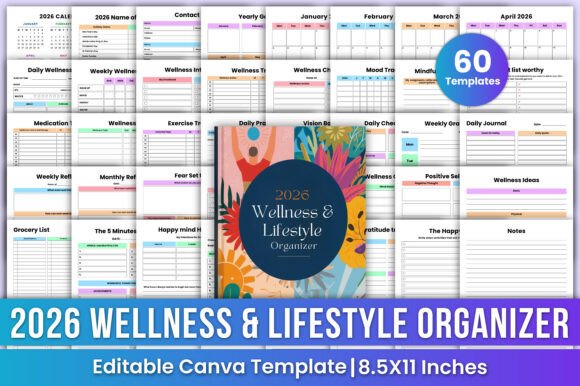
Creatives and solopreneurs use the Daily Planner, Weekly Outline, and Task Planning pages to protect focus amid constant context-switching—while the Self-Care Focus and List of Value Words help them reconnect with purpose when hustle culture blurs their boundaries.
Professionals navigating high-stakes environments lean into Tension Check-In and Being Present exercises before difficult conversations—and return to the Weekly Check-In to assess whether their workload aligns with sustainable energy, not just deadlines.
Parents, caregivers, and those rebuilding after loss or transition find grounding in the Gratitude Journal, Positive Affirmations, and Let It Out pages—not to bypass grief, but to create pockets of safety within it.
Even therapists and coaches integrate select worksheets—like Problem Solving or Setting Boundaries—into client sessions, appreciating their clarity and accessibility.
More Than Tracking—It’s Translation
Here’s what sets the Emotional Wellness Recovery Guide apart: it doesn’t just collect data—it helps you interpret it. A Mood Log paired with a Meal Planner might reveal how skipped breakfast correlates with afternoon irritability. A Spending Tracker next to Emotion Words could uncover spending spikes during loneliness or avoidance. The 30-Day Journal Prompts don’t ask for inspiration—they invite honesty: “When did I last say no—and what did my body feel right after?”
This isn’t about perfection. It’s about pattern literacy—the ability to read your own inner language so you can respond, not react.
A Note on Realistic Expectations
This guide won’t erase trauma, replace clinical care, or solve systemic stressors like financial insecurity or workplace toxicity. What it *does* offer is agency within your sphere of influence: the breath you take before replying to an email, the boundary you practice saying “not now,” the five minutes you gift yourself to list three things that felt true today.
Some users start with just one page per week—maybe the Breathing Exercise on Mondays and the Gratitude page on Fridays. Others dive into the Yearly Life Goals section alongside quarterly reviews. There’s no “correct” pace. The only requirement is curiosity—not consistency.
How It Fits Into Everyday Life (No Extra Time Required)
You don’t need to carve out an hour. Try these micro-integrations:
- Morning: Glance at the Daily Planner, then jot one Positive Affirmation beside your top priority.
- Afternoon slump: Flip to Deep Breath Assistance—three rounds, eyes closed, no timer needed.
- Evening wind-down: Spend 90 seconds filling the Mood Tracker and one line in the Dream Notes section—even if you remember nothing but color or sensation.
- Weekly ritual: Use the Weekly Spending Tracker while reviewing receipts—and ask: “Did this spending reflect my values—or fill a gap?”
No app notifications. No subscription. Just paper, pen, and presence—tools you control.
Choosing What Serves You
If you’ve tried journaling but lost momentum, ask: Was the format too open-ended? Did you need clearer prompts—or space to vent without analysis? The Emotional Wellness Recovery Guide bridges that gap with guided yet flexible pages.
If you’re overwhelmed by digital tools, consider how tactile engagement calms the nervous system. Writing by hand activates different neural pathways than typing—it slows cognition, deepens memory, and creates psychological distance from spiraling thoughts.
If you value both introspection *and* action, notice how features like Appointment Planning, Self Assessment, and Problem Solving move insight into implementation—without demanding grand gestures.
And if you’re supporting someone else—a teen, a partner, a team member—this guide offers shared language. Instead of saying “You should relax,” you might gently offer the Let It Out page or sit together with the Emotion Words list to name what’s underneath the silence.
Your Wellness Isn’t Linear—And Neither Is This Guide
Healing isn’t about arriving at calm forever. It’s about expanding your capacity to hold complexity—to feel grief and gratitude in the same breath, to set a boundary and still feel tender, to track habits without self-punishment.
The Emotional Wellness Recovery Guide mirrors that truth. Its pages don’t demand progress—they honor presence. They don’t measure worth—they reflect back your resilience, often in ways you’ve overlooked.
So whether you’re beginning your wellness journey or returning to it after detours, whether you’re seeking clarity, relief, or simply a gentler way to move through the world—the Emotional Wellness Recovery Guide meets you there. Not with answers, but with thoughtful questions. Not with pressure, but with permission. Not with noise, but with quiet, steady support—page by page.