2027 Stress Processing Journal: A Thoughtful Tool for Emotional Growth and Summer Structure
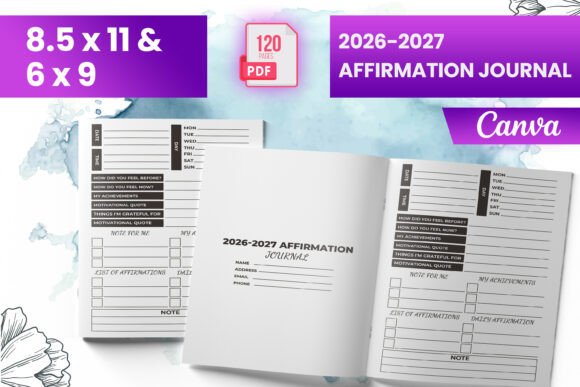
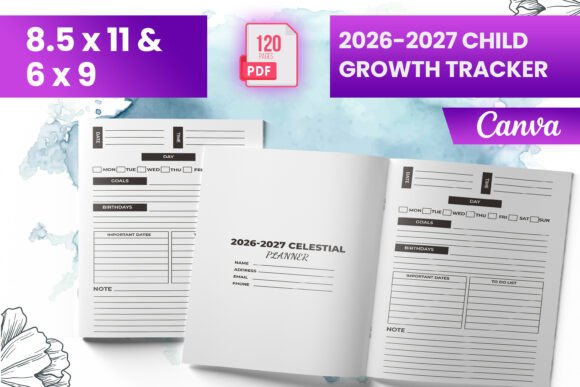
Summer doesn’t have to mean unstructured days or rising anxiety—especially for kids navigating big feelings, transitions, or new expectations. The 2027 Stress Processing Journal bridges emotional wellness and joyful routine in one vibrant, age-appropriate resource. Designed not as a rigid schedule but as a compassionate companion, it supports children (ages 6–12) in naming emotions, exploring stressors gently, and building self-awareness through play, reflection, and creativity.
More Than a Planner—A Framework for Calm Confidence
At its core, the 2027 Stress Processing Journal is built on developmental psychology principles: children learn best when they’re engaged, empowered, and given space to process—not suppress—their inner experiences. Unlike generic summer activity books, this journal integrates evidence-informed tools like stress tracking, gratitude practice, and problem-solving walkthroughs—adapted into child-friendly language and visuals.
Inside, you’ll find:
- Daily planning pages with gentle prompts (“What made me smile today?” “One thing I tried that felt hard—and how I handled it”)
- Chore charts that double as confidence builders—each completed task links to a small act of care (e.g., “Watered the plants → I helped something grow”)
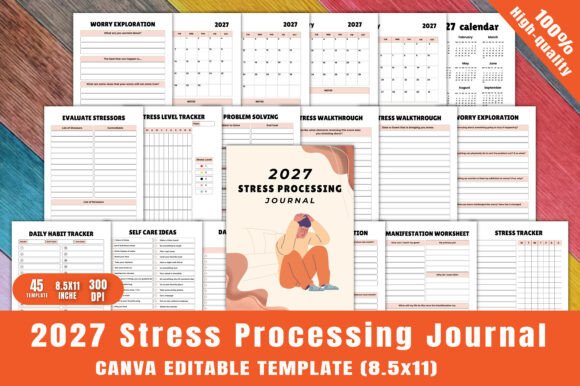
- Imaginative exploration pages, including “My Bucket List Notes,” “A Letter To Myself,” and “Stress Walkthrough Page 4”—a step-by-step guide for naming physical sensations, thoughts, and choices during moments of overwhelm
- Self-care calendars and habit trackers that normalize rest, movement, and quiet time—not as luxuries, but as essential parts of being human
How It Works in Real Life
Consider Maya, a rising 4th grader who struggled with separation anxiety after a school year full of transitions. Her mom introduced the 2027 Stress Processing Journal at the start of summer—not as homework, but as “our summer storybook.” Each morning, Maya picked one page: sometimes coloring the Stress Relief Coloring Page, sometimes drawing her “worry” on the Worry Exploration Page, then crossing it out and writing what she’d say to a friend feeling the same way. By week three, she began using the Problem Solving Stress Level Tracker to rate her mornings (1–5), spot patterns (“I feel wobbly before swimming lessons”), and co-create solutions (“Let’s pack my favorite towel + listen to our song on the way”).
Or take Leo, an 8-year-old with ADHD, who thrived with visual structure but resisted traditional planners. His therapist suggested pairing the 2027 Stress Processing Journal with short daily check-ins. The Weekly Journal To Do List gave him agency—he chose three items (not ten); the Thoughts Tracker helped him notice when “I’m bad at this” showed up, and the Manifestation Worksheet invited him to sketch what “feeling steady” looked like (a tree with deep roots, he drew). Over six weeks, his family noticed fewer meltdowns before transitions—and more spontaneous moments of self-advocacy (“Can we use the calm-down corner first?”).
Who Benefits—and Why It Fits Different Needs
The 2027 Stress Processing Journal serves multiple roles across contexts:
- Parents seeking low-pressure ways to support emotional regulation without therapy referrals—or as a complement to ongoing care.
- Educators and counselors looking for printable, classroom-ready tools for social-emotional learning (SEL) blocks, summer bridge programs, or small-group interventions.
- Therapists and coaches who want developmentally grounded handouts that families can use between sessions—reinforcing coping skills with consistency and warmth.
- Creators and small business owners offering digital wellness products: the editable Canva template link allows for light customization (brand colors, logo placement) while preserving clinical integrity.
Key Features That Make It Stand Out
What sets the 2027 Stress Processing Journal apart isn’t just quantity—it’s intentionality in design:
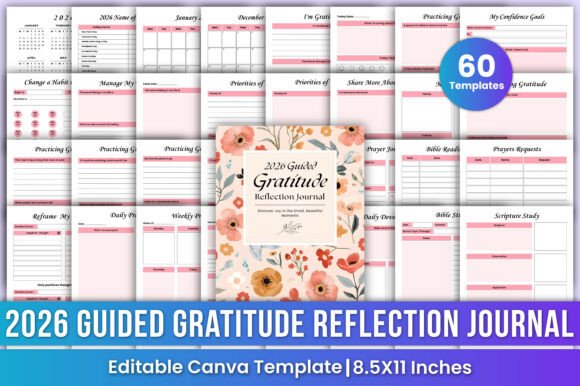
- 45 unique, professionally designed pages—no filler. Every spread has a clear emotional or functional purpose, from the Monthly Reflection (with sentence stems like “This month, I learned…” and “Next month, I’d like to try…”) to the Daily Gratitude prompt (“One person who made me feel seen was…”).
- 100 customizable source files—not just one PDF. This means educators can isolate the Stress Sources worksheet for a group lesson, or parents can print only the Self Care Ideas and Habit Tracker for a focused two-week reset.
- Print-ready, high-resolution output (300 DPI) ensures crisp lines for coloring, legible fonts for emerging readers, and durability for repeated use—even laminated.
- No login walls or subscription fees: Once downloaded, the editable Canva template link grants full access—ideal for schools with limited tech budgets or families avoiding app-based tracking.
Strengths to Lean Into
The 2027 Stress Processing Journal excels where many resources fall short: it avoids pathologizing normal childhood stress. There’s no “anxiety scorecard” or diagnostic language—just compassionate scaffolding. The Stress Level Tracker, for example, uses weather icons (sunny, cloudy, stormy) instead of numbers, reducing pressure to “get it right.” And the My Bucket List Notes page invites wonder over achievement—“Things I want to feel,” “Places I want to imagine,” “Sounds I love”—keeping focus on internal experience, not external output.
Realistic Considerations
It’s not a magic fix—and that’s by design. The journal works best when paired with presence: 5–10 minutes of shared reflection, a curious question (“What part of this page felt easy? What part felt sticky?”), or modeling your own use of the A Letter To Myself page. It also assumes basic literacy; for pre-readers, caregivers can adapt prompts orally or use stickers/drawings. And while the editable Canva template is powerful, minor design tweaks (like changing font size for dyslexic readers) may require basic familiarity with Canva’s interface.
Getting Started—Without Overwhelm
You don’t need to begin on January 1st—or even June 1st. The 2027 Stress Processing Journal includes a 2027 Calendar (Jan–Dec) and Monthly Planner, but many families start mid-summer with just three pages: the Daily Habit Tracker, the Stress Walkthrough Page 4, and one Stress Relief Coloring Page. That’s enough to build rhythm and safety. Others use it as a back-to-school transition tool—completing the Monthly Reflection in August to honor growth and name hopes for the year ahead.
Whether printed in full or used digitally on a tablet with a stylus, the journal meets kids where they are: not as projects to be fixed, but as whole, feeling humans worthy of attention, tools, and time.
Final Thought: A Summer That Nourishes, Not Just Fills
In a world of overscheduled camps and endless screen time, the 2027 Stress Processing Journal offers something quietly revolutionary: permission to pause, process, and play—with purpose. It doesn’t promise stress-free days. Instead, it equips children with language, visuals, and routines that transform uncertainty into curiosity, overwhelm into agency, and summer into a season of grounded growth. Because the most meaningful structures aren’t built around hours—but around heartbeats, breaths, and the quiet courage it takes to say, “I’m figuring this out.”