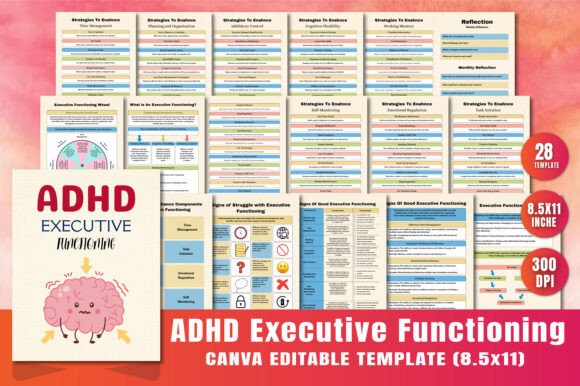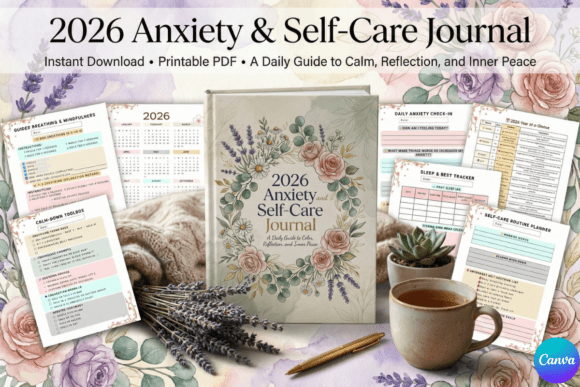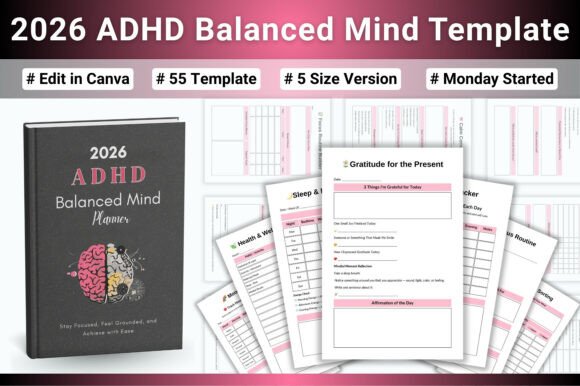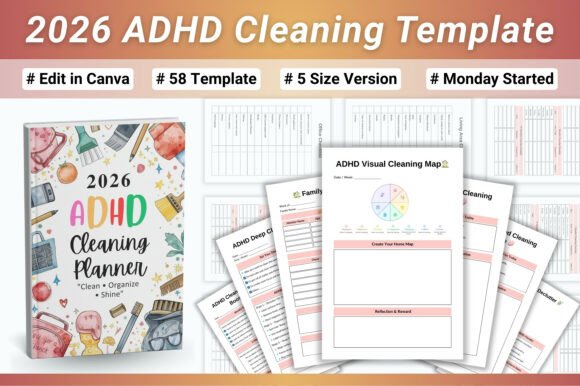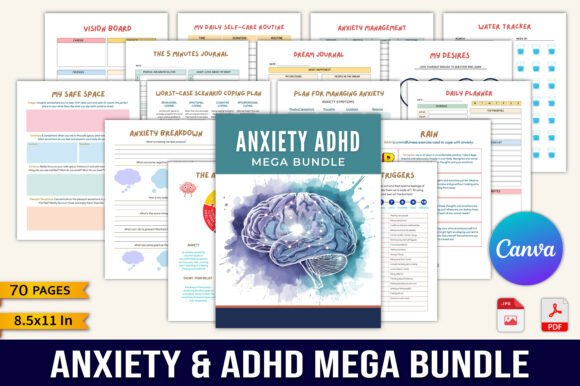
Anxiety ADHD Mega Bundle
Modern life doesn’t pause for overwhelm—and neither should your toolkit. The Anxiety ADHD Mega Bundle isn’t another generic self-help download. It’s a thoughtfully layered, clinically grounded, and deeply practical mental-health resource built for people who juggle deadlines and dopamine dips, creative bursts and brain fog, high expectations and quiet exhaustion—all in the same day.
This guided workbook meets a growing need: not just symptom management, but sustainable integration. Professionals, educators, freelancers, and entrepreneurs aren’t seeking quick fixes—they’re looking for systems that align with how their minds actually work. For those navigating anxiety *and* ADHD, traditional approaches often fall short. Calming techniques may feel inaccessible when executive function is strained. Exposure exercises can stall without structure. Mindfulness may seem abstract without anchoring prompts. The Anxiety ADHD Mega Bundle bridges those gaps—blending evidence-based strategies with real-world usability.
Why This Bundle Fits Today’s Rhythms—Not Just Old Models
We’re seeing a quiet shift in how mental wellness is approached: away from “fixing” and toward *scaffolding*. People no longer want to be told to “just breathe” or “try harder to focus.” They want tools that honor neurodiversity, accommodate fluctuating energy, and adapt to fragmented attention spans. That’s where this bundle stands apart—it assumes you’re already doing your best, and offers support *within* that reality.
Consider a freelance graphic designer launching a new brand identity while managing social anxiety around client calls. She might use the Exposure Tracking sheet to gradually desensitize herself—not by jumping into high-stakes presentations, but by starting with a 90-second voice memo to her own inbox. Later, she layers in the 4-7-8 Breathing Technique before dialing in, then logs her Anxiety Breakdown afterward—not to judge the experience, but to notice patterns: Was it the open-ended nature of the call? The lack of agenda? The silence between questions? Over time, those micro-observations build into actionable insight.
Similarly, an educator with ADHD might use the Daily Planner section not as a rigid schedule, but as a flexible anchor—pairing time-blocking with sensory cues (e.g., “3:00 PM → lavender oil + 2-minute Bumble Bee Breathing before parent-teacher conferences”). The Coping Toolbox page becomes a personalized reference, not a checklist—listing what *actually* works *for them*, whether that’s tactile grounding, movement breaks, or naming emotions aloud.
More Than Techniques—It’s a Framework for Agency
The bundle’s strength lies in its sequencing. It begins not with tactics, but with orientation: This Book Belongs To, What is Anxiety?, What Anxiety Feels Like. That matters. Many people—especially those with ADHD—spend years mislabeling emotional surges as laziness, disorganization, or personal failure. Clarifying the physiology and psychology behind anxiety builds self-trust. Recognizing that racing thoughts, physical restlessness, or avoidance aren’t character flaws—but signals—changes the relationship with discomfort.
Then comes the pivot: Willingness to Face Fears and How to Turn Willfulness Into Willingness. This distinction is subtle but critical. Willfulness says, “I shouldn’t feel this way.” Willingness says, “This is here right now—and I can choose how to respond.” That mindset shift underpins everything from exposure work to breathing practice. It’s not about eliminating anxiety; it’s about expanding your capacity to hold it without being hijacked by it.
Exposure That Honors Neurodivergent Realities
Traditional exposure therapy can feel overwhelming—or even counterproductive—for ADHD brains that thrive on novelty and struggle with sustained effort. The Anxiety ADHD Mega Bundle adapts the model. Its Types of Exposure Therapy section clarifies options: imaginal, in vivo, interoceptive—and crucially, includes guidance on *starting small*, using timers, pairing exposures with preferred sensory input, and tracking progress visually (the Exposure Results and Facing Your Fears pages are intentionally visual and low-text).
For example, someone avoiding email due to anxiety might begin with opening their inbox for 15 seconds—not reading, just noticing the interface. Next, they label one emotion (“tight chest,” “urgency”) using the RAIN framework (Recognize, Allow, Investigate, Nurture). Then they close it. No pressure to reply. No expectation of “success.” Just data collection. That precision reduces shame and builds momentum.
Breathing, Grounding, and Regulation—No Jargon, Just Utility
The breathing techniques—4-7-8, Bumble Bee, Gimme a Kiss, Box Breathing—aren’t presented as universal cures. Instead, each includes a brief “When to Try This” note: Bumble Bee for auditory grounding during meetings; Gimme a Kiss for quick somatic reset before walking into a room; TIPP Skills (Temperature, Intense exercise, Paced breathing, Paired muscle relaxation) for moments of acute overwhelm. This specificity makes them usable—not theoretical.
Similarly, Progressive Muscle Relaxation is paired with a My Safe Space prompt—not asking users to imagine perfection, but to identify *one* real, accessible place (a corner of their desk, a park bench, even a specific playlist) where they’ve felt even 10% safer. That realism increases follow-through.
Planning Without Perfectionism
The Worst-Case Scenario Coping Plan and Pros and Cons pages gently challenge all-or-nothing thinking. Rather than demanding optimism, they invite pragmatic preparation: “If X happens, what’s one thing I *can* control?” or “What’s the smallest step that would make this feel less impossible?” For professionals managing burnout, that reframing alone can reduce decision fatigue.
The Goals for Overcoming Anxiety section avoids vague aspirations (“be calmer”) and guides users toward process-oriented targets: “Use Exposure Tracking for three small situations this week,” or “Try Be Kind to Your Mind after one moment of self-criticism.” That emphasis on micro-actions aligns with how behavior change actually unfolds—through repetition, not revelation.
A Toolkit Designed for the Long Haul
This isn’t a 30-day challenge. It’s infrastructure. The Anxiety Cycle diagram helps users see how thoughts, feelings, behaviors, and physiology feed each other—so they can intervene at multiple points. The My Anxiety Triggers log encourages pattern-spotting over time: Is it certain types of transitions? Unstructured time? Specific communication styles? That awareness informs smarter boundaries—not just better coping.
And because mental wellness isn’t linear, the bundle includes space for reflection *after* setbacks—not just wins. The Anxiety Breakdown page asks: What happened? What did my body do? What did I tell myself? What helped—even slightly? That kind of compassionate auditing builds resilience far more effectively than striving for flawless execution.
Who Benefits—and How It Fits Into Real Life
You don’t need a diagnosis to benefit. A marketer refining campaign pitches may use the Coping Toolbox to identify which pre-call ritual steadies them most. A blogger drafting vulnerable content might lean on RAIN when self-doubt spikes mid-sentence. A small business owner facing cash-flow uncertainty could apply the Worst-Case Scenario Coping Plan to separate solvable problems from hypothetical catastrophes.
What makes the Anxiety ADHD Mega Bundle resonate today is its refusal to treat mental health as separate from workflow, creativity, or daily logistics. It meets people where they are—in Zoom fatigue, notification overload, and the quiet pressure to always be “on.” And it offers something rare: permission to engage with care, curiosity, and consistency—not cure.