Game Programming for Beginners Workbook
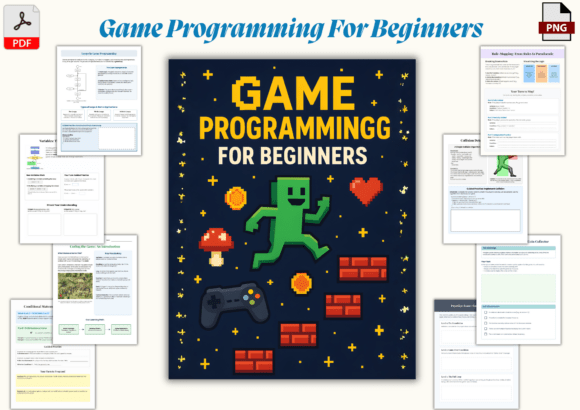
The Game Programming for Beginners Workbook is a dynamic and engaging resource designed to introduce young learners to the world of game development. With its colorful visuals, clear explanations, and interactive coding challenges, this workbook transforms complex programming concepts into accessible, hands-on learning experiences. Perfect for kids and teens aged 8–14, it fosters creativity, problem-solving, and technical skills through a structured yet playful approach.
Visual Style and Appeal
The workbook’s design is both visually stimulating and educational. Each page features pixel-art visuals that bring game elements to life, making abstract coding ideas tangible. The layout is clean and uncluttered, ensuring that even young readers can follow along with ease. Bright colors and consistent iconography help reinforce key concepts, while step-by-step lessons guide students through the process of building their first video games.
Typography and Branding
While the workbook itself doesn’t use a specific font, its visual style aligns with modern typography principles that emphasize clarity and engagement. In branding and marketing, a well-chosen typeface can significantly influence how a product is perceived. A premium font, such as a sans serif or modern typography option, would complement the workbook’s energetic and tech-forward vibe. These fonts are often used in digital and print media to create a clean, professional look that appeals to both children and educators.
Where the Font Works Best
A font like the one suggested for the Game Programming for Beginners Workbook works exceptionally well in creative and educational contexts. It’s ideal for logo design, editorial design, packaging design, and web design. Its legibility makes it suitable for social media graphics, blog posts, and print materials targeting young audiences or STEM-focused communities.
Readability and Visual Hierarchy
One of the most important aspects of any font is readability. A well-designed typeface ensures that content is easy to read, even at smaller sizes. For the Game Programming for Beginners Workbook, a serif or script font could add personality, but a sans serif font might be more practical for long-form content. The choice of font should support the visual hierarchy, helping readers distinguish between headings, subheadings, and body text.
Font Pairing and Design Assets
When selecting a font for a project like the Game Programming for Beginners Workbook, it’s essential to consider font pairing. Pairing a bold, modern sans serif with a softer, more decorative script can create a balanced and visually appealing design. This approach is commonly used in brand identity and creative font applications to maintain consistency while adding visual interest.
Design assets such as icons, illustrations, and color schemes also play a crucial role in enhancing the overall appeal of the workbook. These elements work in harmony with the chosen font to create a cohesive and engaging user experience. Whether it’s for web design or print publishing, the right combination of typography and design assets can make all the difference.
Commercial Licensing and Practical Considerations
For creators and publishers looking to use a font in commercial projects, it’s important to evaluate commercial licensing options. Not all fonts are available for use in print or digital media, so choosing a font with the appropriate license is critical. When testing font pairings, consider factors like readability, visual balance, and brand consistency.
Additionally, evaluating how a font performs across different platforms—such as desktop publishing, web design, and mobile interfaces—can help ensure that the final product meets the needs of its audience. Testing the font in various environments will provide valuable insights into its suitability for the intended use case.
Real-World Applications
The Game Programming for Beginners Workbook is not just an educational tool; it’s also a versatile resource that can be adapted for a variety of real-world applications. From STEM workshops to after-school programs, this workbook provides a foundation for developing digital literacy and technical skills. Its structured approach and interactive exercises make it an excellent choice for both homeschooling and classroom settings.
For small business owners and entrepreneurs, the principles taught in the workbook can be applied to a wide range of creative and digital projects. Whether designing social media graphics, packaging design, or brand identity, understanding the fundamentals of typography and design can enhance the visual appeal and effectiveness of any project.
Conclusion
The Game Programming for Beginners Workbook is more than just a learning tool—it’s a gateway to a world of creativity and innovation. By combining engaging visuals, clear explanations, and hands-on coding challenges, it empowers young learners to explore the exciting realm of game development. Whether you’re a designer, marketer, or educator, the principles and design considerations discussed here can help you create compelling, visually appealing content that resonates with your audience.